If you have ever hummed ‘Tu Hi Re’ or turned to ‘Hanuman Chalisa’ late at night, you have already met the voice of Hariharan. At 70, the genre-bending icon has recorded over 15,000 songs in multiple Indian languages, moving with ease from film ballads to devotional anthems. Known for shaping Urdu blues and fusion in India, he carries decades of riyaaz with quiet pride. Yet he is far from the stern classical stereotype. With his shaggy Seventies hair, round sunglasses, and playful humor, he feels more like the coolest man in the room than a distant maestro. Still, step into the studio and the mood shifts. His voice turns intimate and searching, as heard in ‘Roja’ and ‘Ay Hairathe’, where he gave male longing a rare softness.
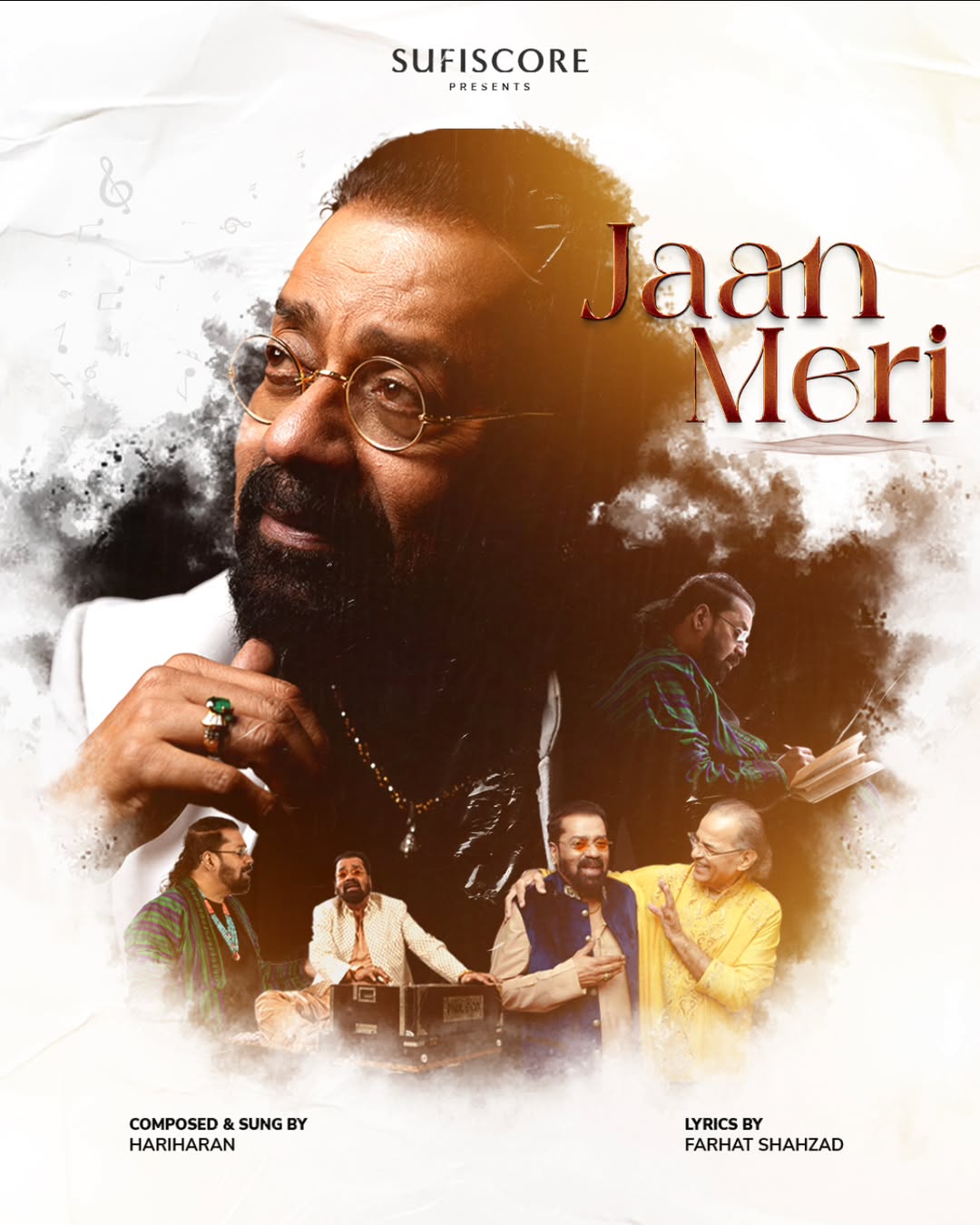
He believes ghazals matter now more than ever. In an era where algorithms influence everything from duration to hooks, the form demands intention. It asks listeners to sit with feelings instead of scrolling past them. “We want to be in control of things. Our whole life has become cut to cut, and there’s no breathing space. When you have a ghazal or romantic songs, it makes you more natural to what human beings are; to let it be, to simmer, and let things take their course.” Then, with a laugh, he added, “If you’re having parties for breakups, then ghazals should be popular yaar.”
“I’ve never cared about numbers. There’s nothing known as a foolproof hit song,” he said calmly, reinforcing that sound always comes before statistics.
The album also experiments with form. The music video for Baat Se Baat blends ghazal with bossa nova, a pairing his sons Akshay and Karan Hariharan helped shape. Karan directed and acted in the video, where his father becomes a silent narrator to a tender love story. What appears to be a light urban romance reveals its emotional core when the female lead responds in sign language, reminding viewers that love does not depend on spoken words. Karan explained the vision simply: “I think it’s a very universal feeling of craving someone to understand you without needing to explain yourself. That was the crux.” The collaboration between father and sons appears seamless. “There’s no conflict as such,” Akshay shared, adding that open dialogue keeps the creative process fluid.
Looking ahead, Hariharan is turning to television with Sartaj e Ghazal, set to air on Doordarshan. Positioned as India’s first dedicated ghazal reality show, it aims to spotlight young voices who value independence over formulas. “The future of music, if it is to be, is only independent music,” he affirmed, smiling at the thought of the next generation carrying the torch forward.
Follow Hariharan on : Facebook| Twitter| Instagram
Check out For More News Updates on Google News