


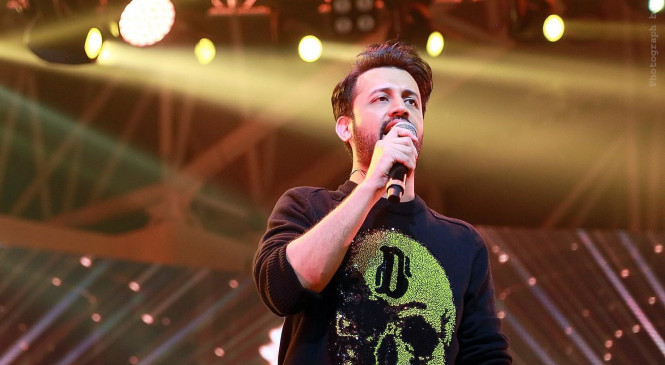
Image: [AtifAslamOfficialFanPage] via Facebook
Nearly a decade after being barred from working in India, Pakistani singer Atif Aslam has opened up about the restrictions that kept him away from a country where his music has long enjoyed a devoted following. Despite the ban, his connection with Indian listeners has remained strong, with fans continuing to discover and revisit his songs over the years. Reflecting on the experience, Atif admitted that he misses his Indian audience and appreciates the love they have continued to show him. Interestingly, the restrictions also gave the singer an unexpected opportunity to look inward. Being away from the spotlight helped him understand himself better and explore his identity as an independent artist. He also took this time to view the difficult period with a renewed sense of gratitude.
Atif Aslam says this ban changed his journey

Why was the ban imposed?
Restrictions on Pakistani artists in India became increasingly prominent in 2016 as tensions between the two countries intensified. That year, Atif Aslam was among the artistes affected when his scheduled concert in Gurgaon was cancelled after the district administration advised organisers to defer the event. His performance also faced opposition from political groups, reflecting the growing pressure surrounding Pakistani artistes working in India.
View this post on Instagram
The situation took a more formal turn in September 2016 when the Indian Motion Picture Producers Association passed a resolution against hiring Pakistani musicians, actors, and technicians until relations between the two countries improved. The decision further limited opportunities for Pakistani talent in the Indian entertainment industry, where Atif Aslam had already built a strong connection with audiences through his music. Following the 2019 Pulwama terror attack, tensions escalated once again. The All India Cine Workers Association announced a ban on Pakistani artists working in the Indian film industry. It further closed the door on cross-border collaborations. For musicians like Atif, these developments meant stepping away from a market where their work had found a deeply loyal audience base.
Music finds its own way
Despite being unable to release new music in India for years, Atif Aslam said his songs have continued to reach listeners across the border through unconventional means. Reflecting on the enduring connection with his Indian audience, the singer said, “For the past 10 years, I haven’t done a song there. My fans are listening over VPN, and they burn the CDs and give them to people. Not that I appreciate piracy, but music will reach wherever it has to reach,” he said.

The way his music continues to travel also took the singer back to the early days of his career, when songs depended on radio, CDs, and cassette tapes to find an audience. Long before streaming platforms changed how listeners discovered music, his first single followed that familiar path and gradually gained popularity. “That is how my first single got out. Nobody knew who the guy was. The song became famous; it became a huge success all over radio, CDs and cassettes,” Atif recalled.
Atif confessed that he missed Indian fans
After years away from India, Atif Aslam had a heartfelt message for the listeners who have continued to stand by his music despite the restrictions keeping him away from the country. Speaking about the bond he shares with his Indian audience, the singer made it clear that geographical and political barriers have done little to stop his songs from reaching those who still connect with them.
“It’s alright that there are certain artistes you get to hear, but I bet if you love me enough, you will know where to find me. If you love my music, you know where to find me. My music will definitely reach you,” Atif said.
Rather than allowing the situation to become a source of disappointment for his fans, the singer encouraged them to keep listening and reminded them that he still misses the people who have supported his journey. “Don’t feel bad about it, don’t feel sad about it. I always wanted to tell you that I miss you guys. I don’t miss working over there, but I miss you guys,” he said.
Interestingly, Atif also reflected on how the ban influenced his growth as an artist. Being away from playback singing gave him more space to create music on his own terms and explore a side of his artistry that may have remained undiscovered otherwise. “I have learnt a lot from playback singing, and if this ban didn’t happen, I think I would be unable to make my own music. So I thank you guys for that as well,” he said.
He also thanked the fans who continued to support his concerts, albums and songs. “I really appreciate that you guys have stood by me. You pour so much love at my concerts and albums and love my songs,” he said. Looking back, Atif added, “I thank those who have banned me as well; otherwise I wouldn’t be able to explore myself,” he said.
Atif Aslam and his Bollywood success
Atif Aslam’s connection with Indian listeners began a while before his Bollywood debut. His early work in Pakistan had already made waves across the border. He first gained wider attention as part of his Pakistani rock band Jal, where ‘Aadat’ became a defining breakthrough. The song later found another life when the singer included his own version on his debut solo album, ‘Jal Pari’, which was released in 2004.

Follow Atif Aslam on : Facebook |Instagram | Twitter
Check out For More News Updates on Google News


